
Return to the Kingdom of Bicycles
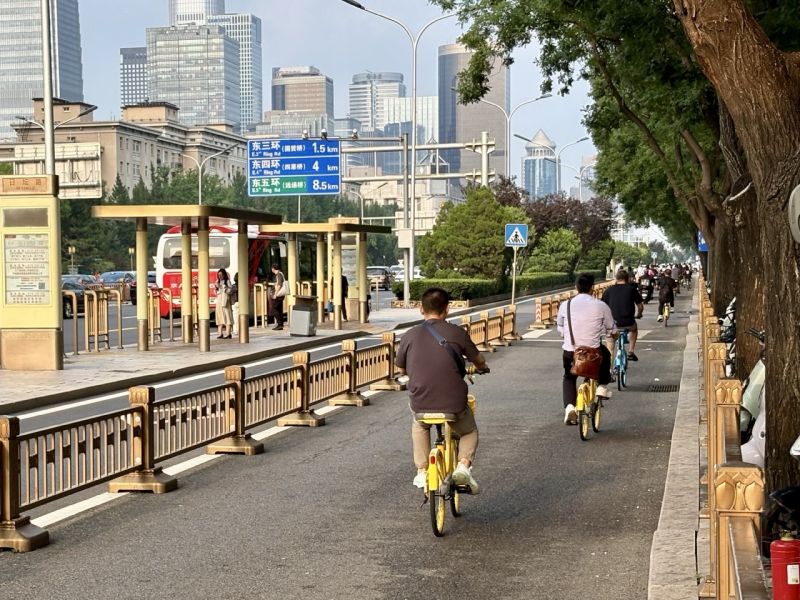
Beijing has returned to being the Kingdom of Bicycles. After decades of neglect, the city has invested heavility in wide and protected bicycle lanes along major thoroughfares, as well as any street wider than 12m curb-to-curb. The number of cyclists is mind-boggling, with bicycle traffic jams are frequent occurance. While you still find the people riding the classic 1980s steel bikes, the majority now ride pedal bikeshares and electric mopeds. The latest street designs feature rows of trees on either side, bicycle traffic signals, and refuge islands at intersections.
VOMobility visited Beijing to document best practices in active mobility in Asia for on upcoming publication on how the Asian Development Bank may scale up its investments in active mobility.
Tianjin's Active Mobility Mega Project
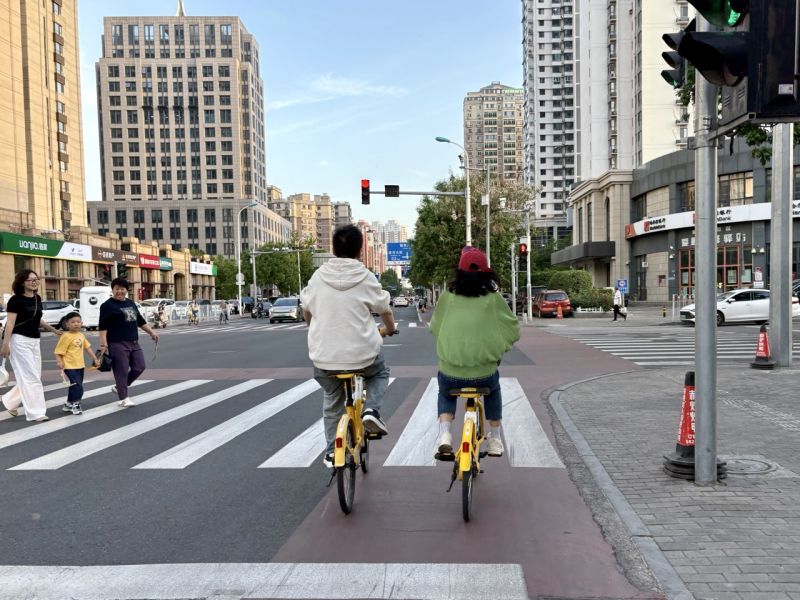
The city of Tianjin, China’s fifth-largest city near Beijing, opened in 2022 a 145mUSD project to improve walking and cycling in the city center and on routes connecting to metro stations. The World Bank-financed project took an active mobility ‘Megaproject Mindset’, improving metro access to 96 stations across 189 streets, over a length of 132 km. For cycling, 126 km of bike lanes and 138,000 bike parking racks were installed. Commercial pedestrian streets were renewed or newly constructed, and 38 public parks, squares and gardens were opened. The project has been a major success, with large mode shifts to active mobility, increased metro ridership and an economic rate of return of 53.54%. It won Tianjin several Chinese awards as well as the international Sustainable Transport Award, the world’s most honored award recognizing achievements in sustainable transport.
VOMobility visited Tianjin to document best practices in active mobility in Asia for on upcoming publication on how the Asian Development Bank may scale up its investments in active mobility.
Green Mobility Corridor in Tashkent, Uzbekistan
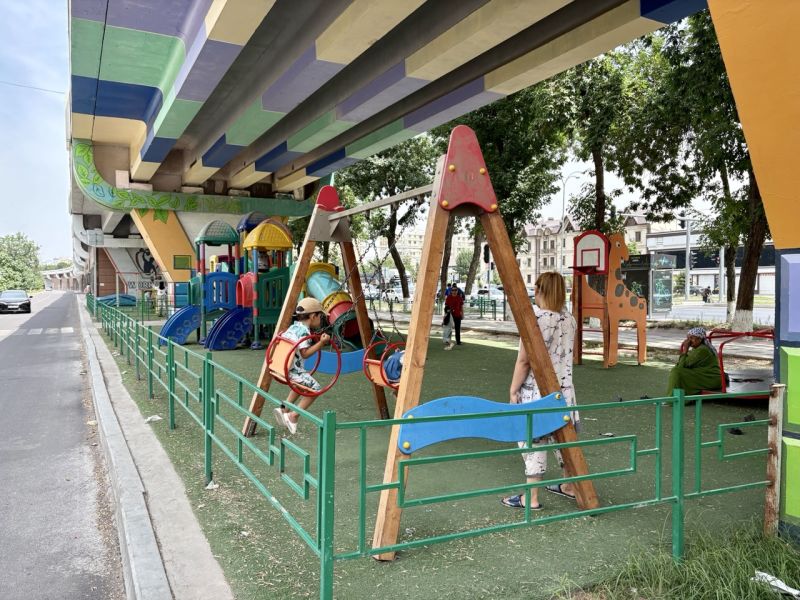
VOMobility is working in Uzbekistan’s capital Tashkent on a green mobility corridor, financed by the Asian Development Bank. The corridor will feature improved buses and bus lanes, as well as enhanced facilities for walking and cycling. The city was rebuilt in the 1960s after a devastating earthquake, following Soviet-style planning. The wide set-up allows for wide footpaths, an increasing number of bicycle lanes, and numerous parks, greenways and public spaces. Underneath the elevated metro line 4, public playgrounds, outdoor gyms, shops and restaurants were built in recent years.
Yanji BRT project is a true Complete Street transformation
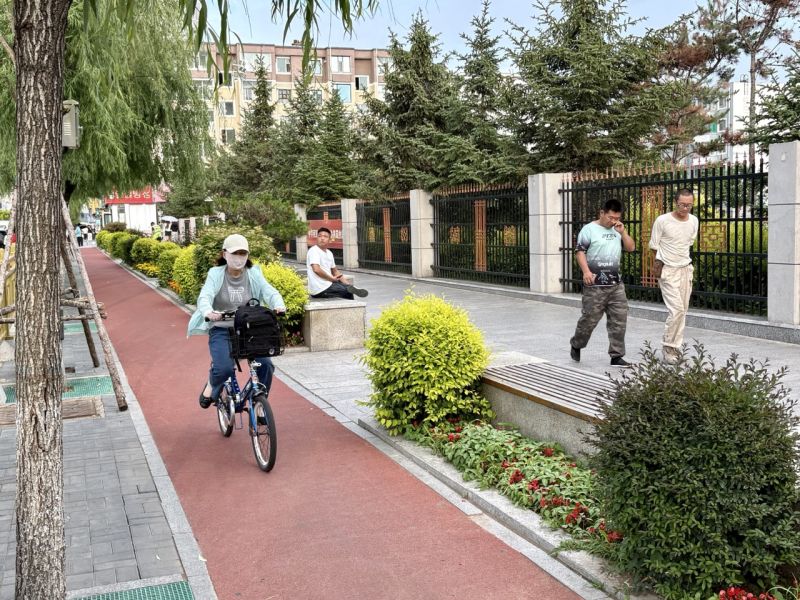
VOMobility was involved in 2021 in the planning of the ADB-financed Yanji Bus Rapid Transit system. The Chinese city, on the border with North Korea, implemented the system with continuous footpaths and bicycle lanes along the corridor with landscaping and public space improvements alongside. A true complete street transformation.
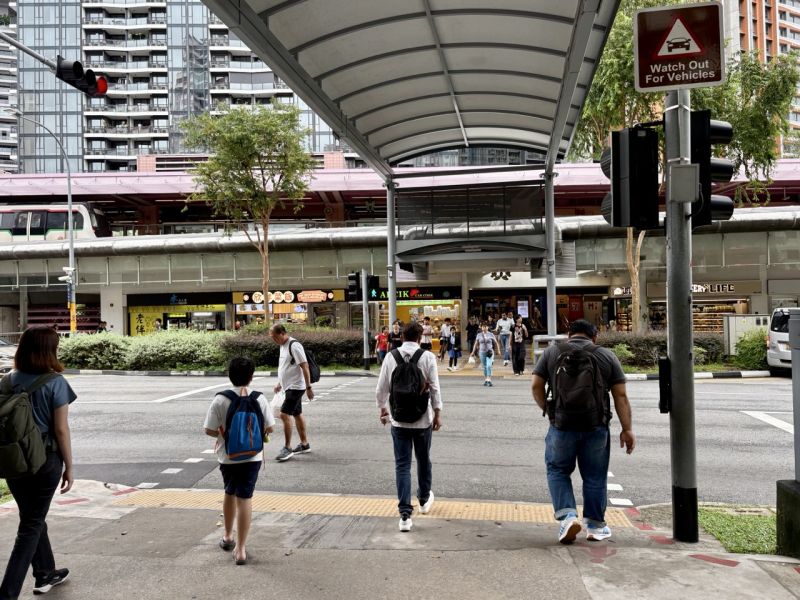
Covered walkways protect Singapore’s pedestrians
Singapore’s year-round hot and wet climate causes challenges to walking, including walking to public transport stops. To promote walking and public transport usage, the city implemented 200km of covered walkways within 400m from all MTR stations, 200m from bus interchanges and LRT stations. The covers even extend above roads, with traffic passing underneath uninterrupted. As the Land Transport Authority calls it: ‘We’ve Got You Covered’.
VOMobility visited Singapore to document best practices in active mobility in Asia for on upcoming publication on how the Asian Development Bank may scale up its investments in active mobility.
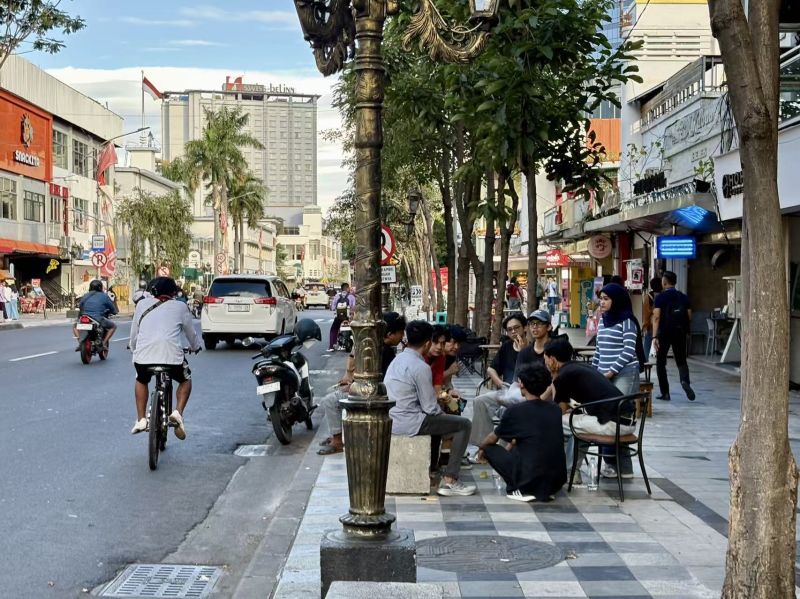
Surabaya complete street attracts the younger generations
Jalan Tunjungan runs through the commercial heart of Surabaya, Indonesia. The street was recently upgraded with wider footpaths, improved landscaping, new public seating, and additional street lights. Renovation was done to historic building facades and cafés and restaurants moved in, creating a vibrant streetscape. Young people now flock the street on evenings and weekends, and night markets and art exhibitions are organized regularly.
VOMobility visited Surabaya to document best practices in active mobility in Asia for on upcoming publication on how the Asian Development Bank may scale up its investments in active mobility.
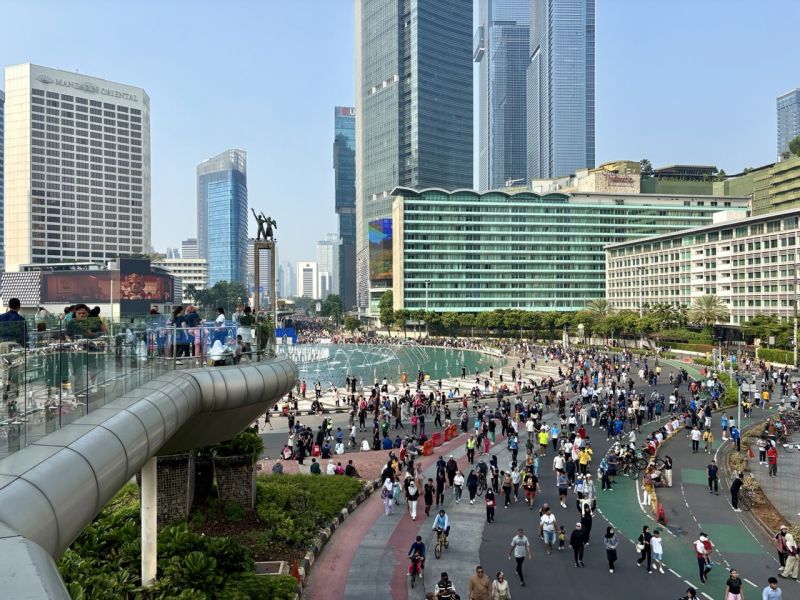
Jakarta’s Sunday car-free days shows active mobility demand
Jakarta has held car-free days on one of the major commercial corridors of Sudirman-Thamrin Avenue since 2007. Over the years it has grown to an immensely popular event that attracts tens of thousands of people on foot and wheels. Two of TransJakarta’s BRT stations opened a second-floor rooftop with cafes and viewing platforms from where you can watch the event.
VOMobility visited Jakarta to document best practices in active mobility in Asia for on upcoming publication on how the Asian Development Bank may scale up its investments in active mobility.
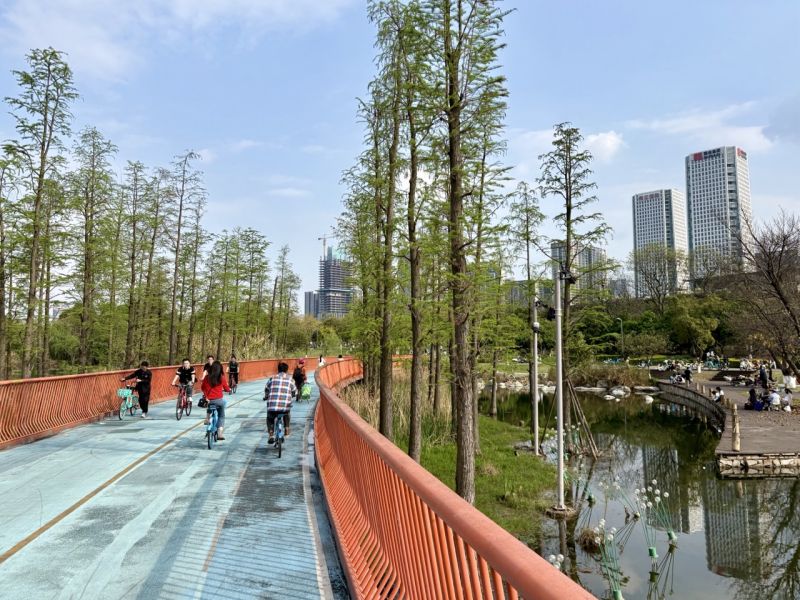
One of the best greenways in the world?
The 100km Tianfu Greenway circles the western Chinese city of Chengdu. It is fully continuous through 78 walking-cycling bridges, and fully segregated from traffic. On a sunny weekend in spring the number of cyclists, young and old, were staggering. The greenway passes through the southern commercial areas, through several parks, and past farms, playgrounds and numerous residential neighborhoods. It is truly one of the best greenways in the world.
VOMobility visited Chengdu to organize workshops on cycling for the government of the Netherlands.
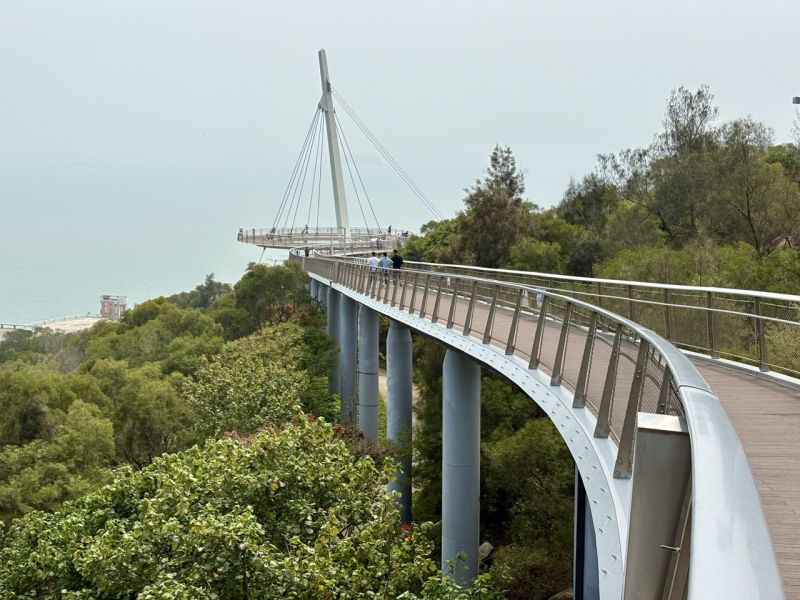
Pedestrian Skyway is Xiamen’s new icon
A 23km long elevated pedestrian skyway opened in Xiamen, China in 2020. The trail runs across the city, connecting many of the city’s offices, shopping centers, neighborhoods and parks. While mainly used for recreation, an increasing number of people uses the elevated bridges to walk to nearby destinations, and to and from public transport stops. An 8-kilometer elevated bicycle highway by the same architects opened in 2017 already.
VOMobility visited Xiamen to organize workshops on cycling for the government of the Netherlands.
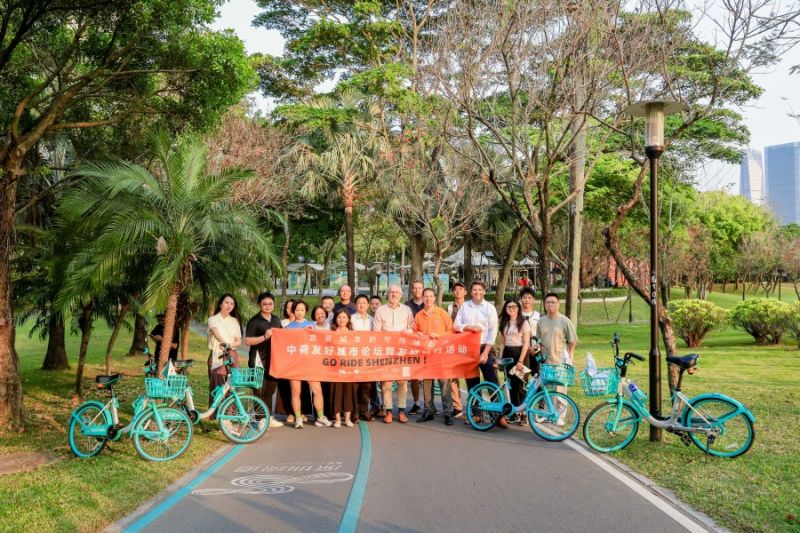
Bicycle workshops in southern China for Netherlands government
VOMobility was asked by the Netherlands Consulate General to organize bicycle planning workshops and training for transport professionals in Guangzhou, Shenzhen, Xiamen and Chengdu. Presentations, Q&As and bicycle rides were held in March 2026, in cooperation with the Dutch Cycling Embassy.
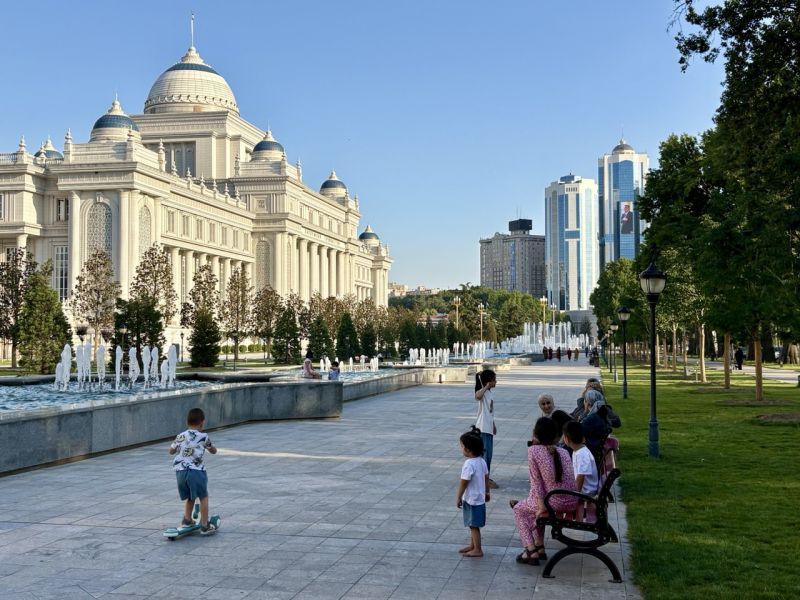
Green Mobility Corridor in Dushanbe, Tajikistan
VOMobility is working in Tajikistan’s capital Dushanbe on a green mobility corridor, financed by the Asian Development Bank. The corridor will feature improved buses and bus lanes, as well as enhanced facilities for walking and cycling. The city center is very walkable with wide footpaths, safe crossings, extensive tree coverage, and numerous parks and playgrounds. The latest projects include large fountains and water features that are popular with families.
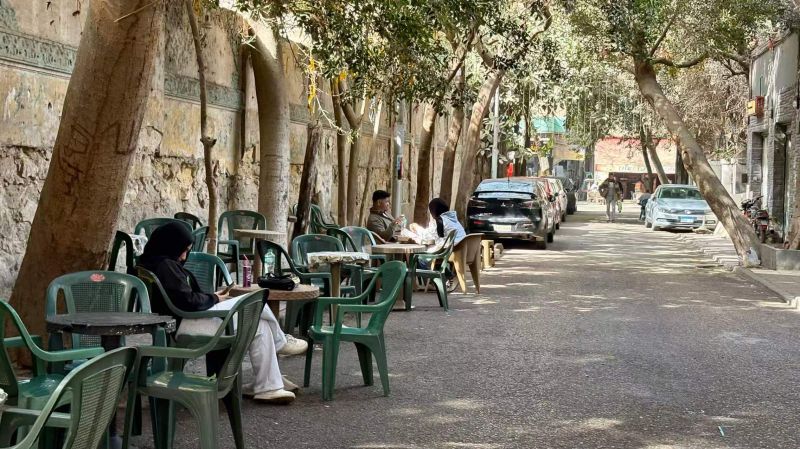
How to allocate curbside street space?
Should curbside space be given to private cars or public cafés? Taken in downtown Cairo, Egypt, February 2026.
.jpg)
Complete street implemented in Vientiane, Laos
VOMobility's design for the historic street of Rue Hengboun in Laos' capital Vientiane led to the city's most vibrant street food market. Several dozen sellers of bbq'ed meat, sticky rice, salted fish, cocunut desserts and more take over every night of the week. The street, formerly without footpaths and used mostly for (illegal) car parking, was turned into a complete street with wider footpaths, bollards, a chicane design to ensure low traffic speeds and some formal on-street car and motorbike parking. Food vendors set up at night when thousands of locals and tourists take over the street.
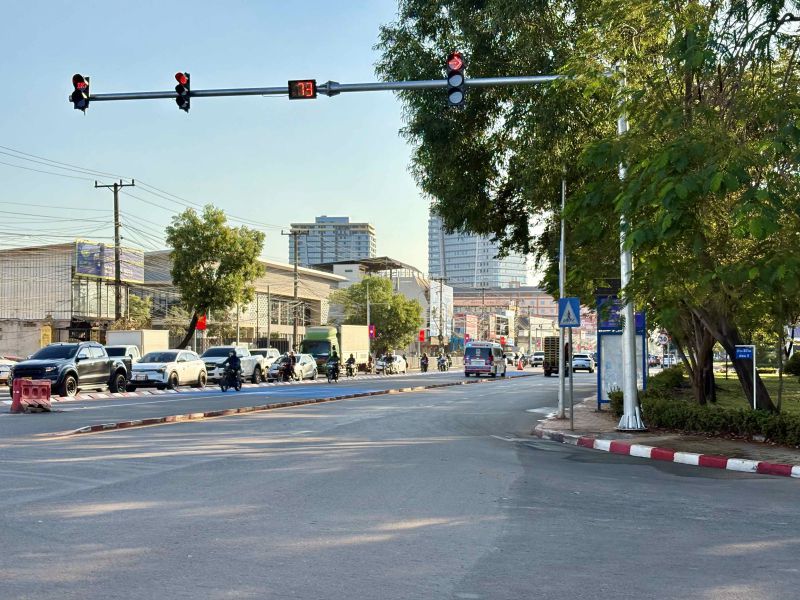
Traffic management along Vientiane's BRT corridor
VOMobility was involved in the earlier stages of the planning and design of the BRT system in Laos' capital Vientiane that is currently under construction. Due to ensuing traffic congestion in this phase, we were asked to assist in improving traffic management along the corridor. The culprit turned out to be the traffic signal phasing plan, that had 3 to 4 minutes cycle plans at most intersections. A new traffic signal plan was developed, including shorter phases, a ban on left turns at most intersections, additional u-turns and improved pedestrian crossings, as well as proposals for improved enforcement of illegal parking along the corridor.
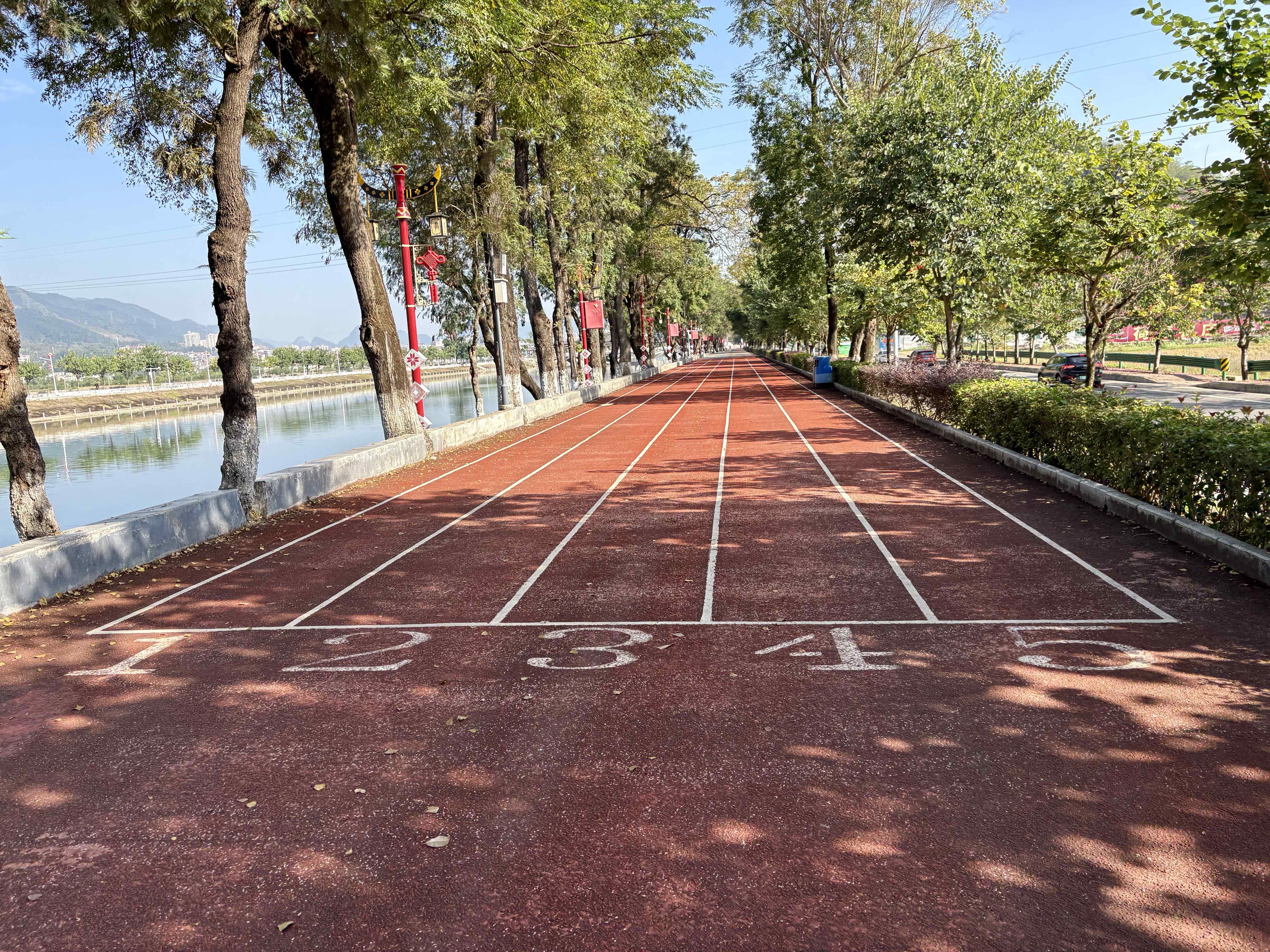
On your marks... Get set? GO!
Why not add a 100 meter sprint track on a greenway? Well done, Liannan (Guangdong Province)
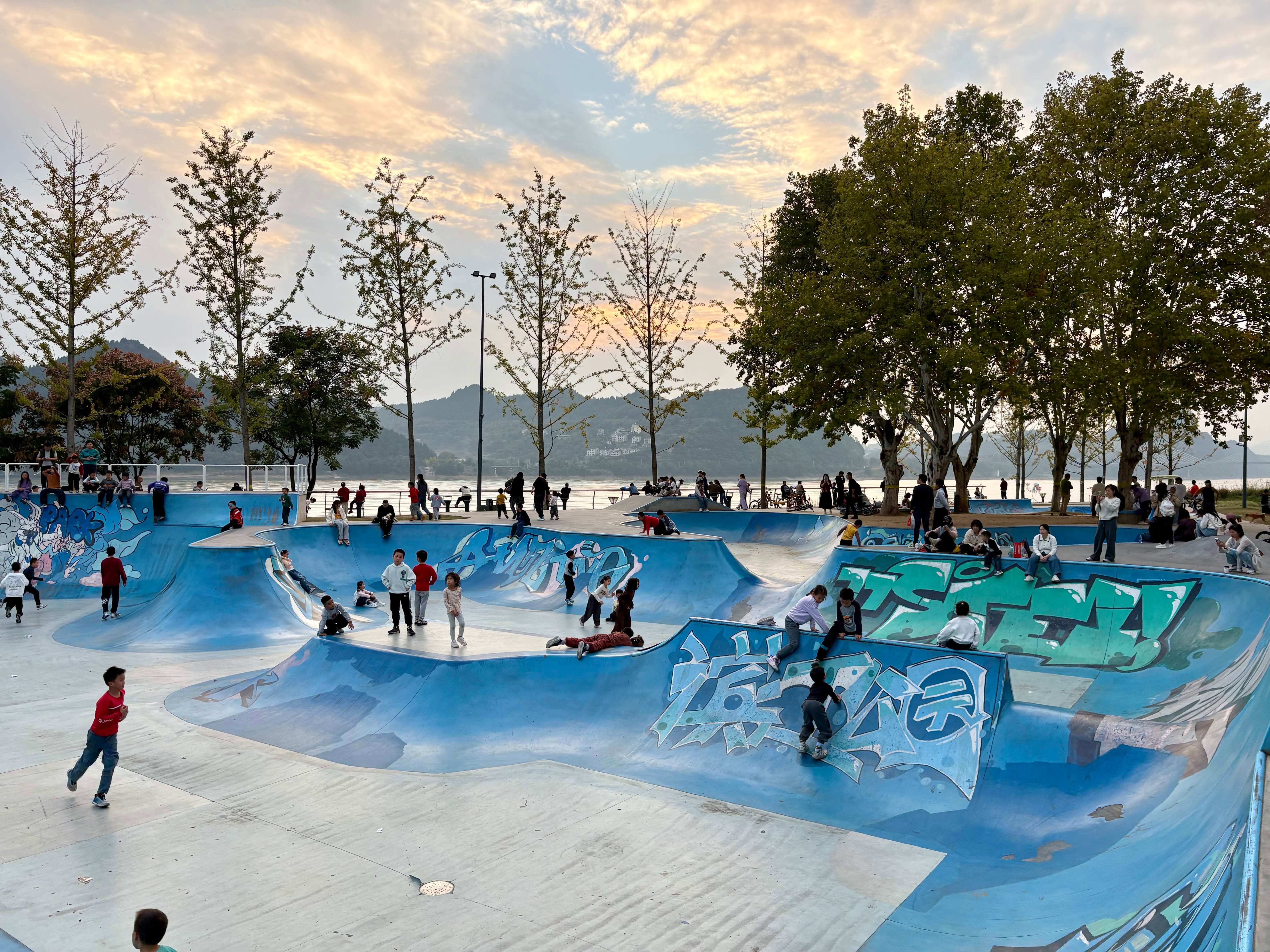
Skate park increases ridership of Yichang's riverside greenway
Yichang, the city that hosts the world's largest dam, in the past 15 years has become an example of urban redevelopment and sustainble transportation. With the help of international development banks, the city implemented a world-class bus rapid transit system, excellent cycling infrastructure and a low-emission zone. Recently, the city has embraced child-friendly cities initiatives, of which the riverside children's park stands out. A large skate park, pump track, modern playground, trampolines, washrooms, restaurants, coffee shops and convenience store attract thousands of families on weekends. Many of them ride bikes to and from, have a picnic in the grass and enjoy the riverside views. A great example of increasing the ridership of greenways through additional functions.
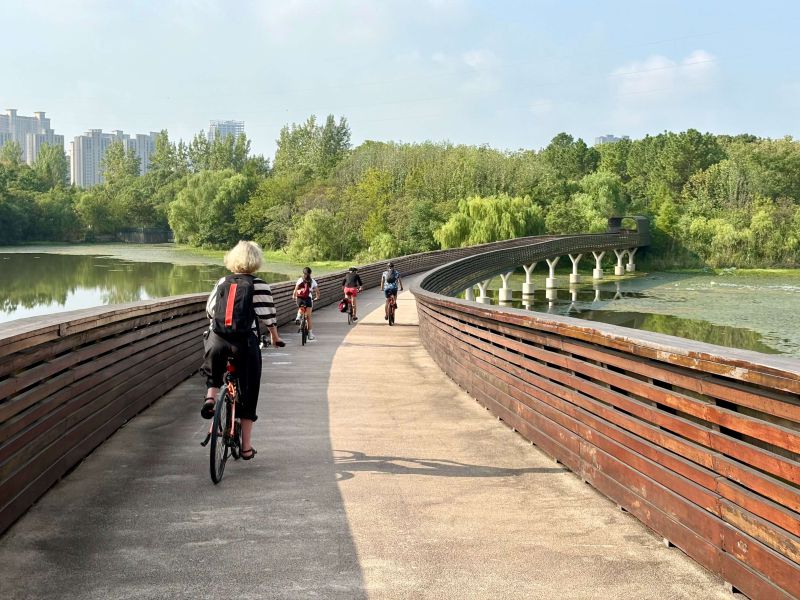
Urban bicycle networks connecting Kunshan's parks
The Chinese city of Kunshan in Jiangsu province built an extensive network of bicycle lanes that connects the many parks and public spaces in the city. These beautiful, quiet, safe and shaded bicycle lanes complement the city's street bicycle lane network. Some spectacular bridges are an essential part of the network. A bike ride on Kunshan's network followed a presentation we gave on Dutch cycling culture for professors, students, and staff at Duke University.
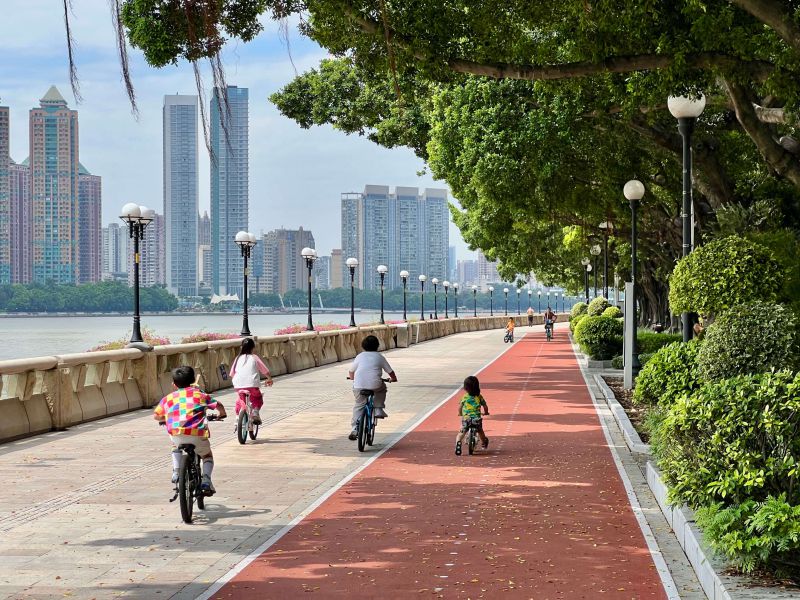
What if kids would design our streets?
What would our cities look like if kids designed our streets? If riding isn't safe for kids, it probably isn't very safe for adults either. Let's do better.
.jpg)
The importance of shaded streets
The difference some leaves make in the temperature, look and feel of a street. Seen in Tbilisi, Georgia.
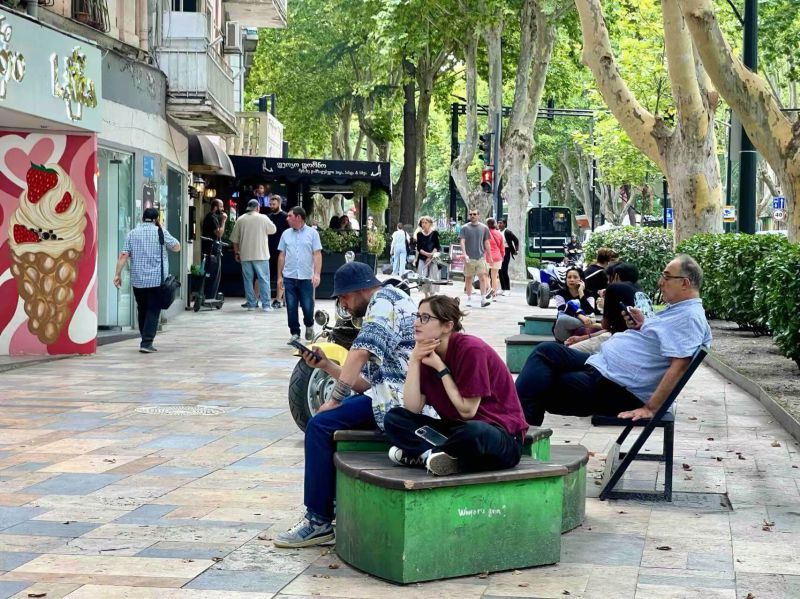
Summer on the Streets
Streets are not only thoroughfares for traffic; they are public spaces and meeting places for people of all ages. With summer approaching, let's imagine how we can design our streets differently, and we can all enjoy a warm summer outdoors!
Photo taken on Ilia Chavchavadze Avenue, Tbilisi, Georgia
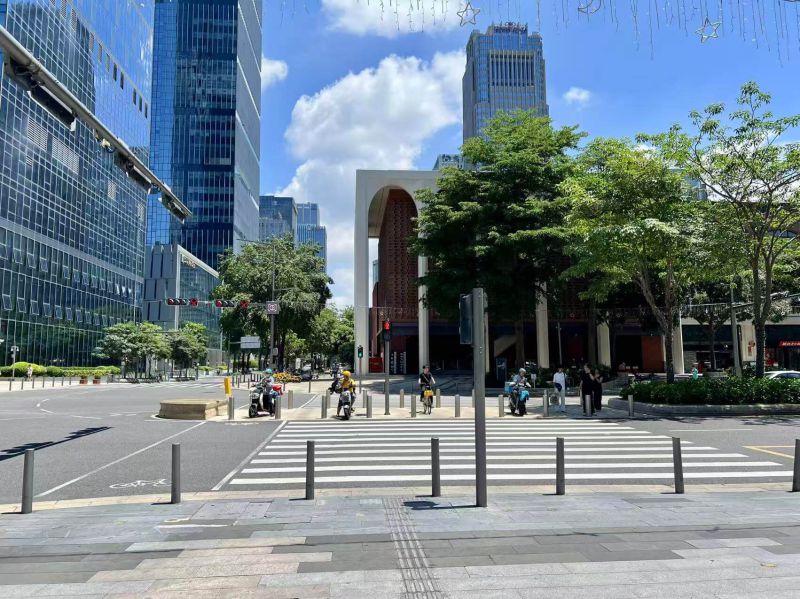
Flush design for accessibility at intersections
This intersection in Shenzhen, China shows an excellent flush design of footpaths and carriageway. For the convenience of everyone, but especially children, elderly, cyclists and those in wheelchairs, this design demonstrates how intersections can easily be made accessible for everyone. Also note the bollards to prevent vehicle encroachment of footpaths, the refuge island and its 'nose tip' to protect from turning traffic.
.jpg)
Public Space in Cold Climates
The Mongolian capital of Ulaanbaatar is cold, and sees snow for most months of the year. But in late spring the snow melts and residents flock to the sun-soaked public spaces, such as the famous Sükhbaatar Square. With only a little turf on top of the cold natural stone, the square turns into a place where families have picnics, friends meet, and children goof around.
.jpg)
Urban Greenway in Ulaanbaatar, Mongolia
VOMobility is assisting the Mongolian capital of Ulaanbaatar and the Asian Development Bank in the development of a Bus Rapid Transit project along one of the city's main arterials. Part of the corridor redevelopment is the improvement of parking and inclusion of facilities for pedestrians and cyclists. In a city that has given away its streets and public courtyards to the car, there are some cool, new greenway projects that are popular with kids, couples, friends and the elderly.
.jpg)
School Street in Hanoi: no cars at school opening and closing
By temporarily blocking access to cars, students no longer need to worry about cars when entering and leaving the school gate. While common in London and Paris, Vietnam's capital of Hanoi implemented School Streets as well. Now let's get rid of motorbikes too!
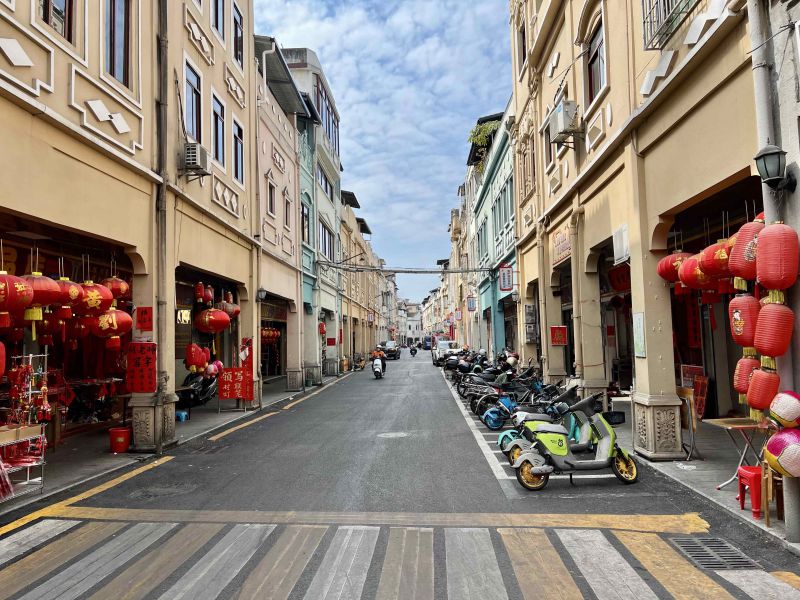
On-street (e-)bicycle parking
Even in smaller cities you may find good examples of road design. A street in Meizhou, eastern Guangdong Province (China), shows how (e-)bicycle parking can easily be incorporated onto small streets.
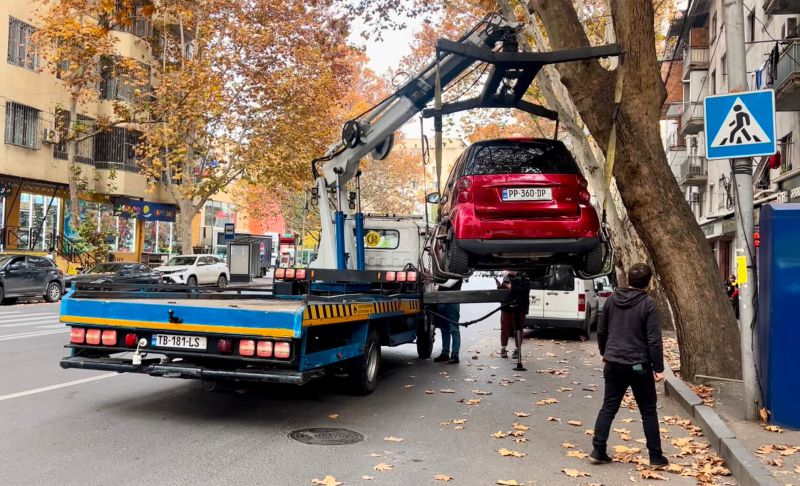
Effective Parking Enforcement in Tbilisi, Georgia
Tbilisi's parking enforcement team has six trucks that quickly remove illegally parked vehicles. This car parked at a bus stop, as seen by a parking attendant who swiftly informed colleagues on her app. The truck arrived and left with the car in just over a minute. The driver receives a text message with a fine and details for where to pick up the car.
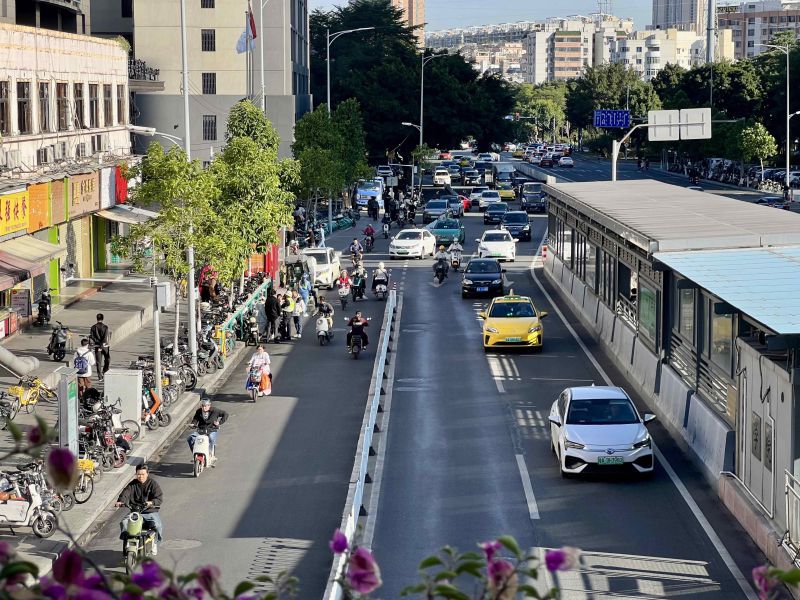
Making way for (e-)cycling
The Guangzhou BRT opened in 2010, carrying close to a million daily passengers. With the rise of cycling and e-bicycles, recently one of three mixed traffic lanes was converted into a wide (e-)bicycle lane. Chinese cities, including Guangzhou, are slowly improving cycling facilities, a.o. due to the rise of electric bikes.
.jpg)
Parking planning along a Bus Rapid Transit corridor
VO Mobility works in Mongolia's capital of Ulaanbaatar on the planning of a Bus Rapid Transit system. The corridor aims to improve facilities for all road users, with priority for bus users, pedestrians and cyclists. Especially at station areas, some parking spaces must be cancelled and space found elsewhere. Parking surveys in those areas often demonstrate that nearby off-street parking facilities and side streets have ample vacancies. Moreover, much of the parking demand is long-term storage, with numerous cars on flat tires.
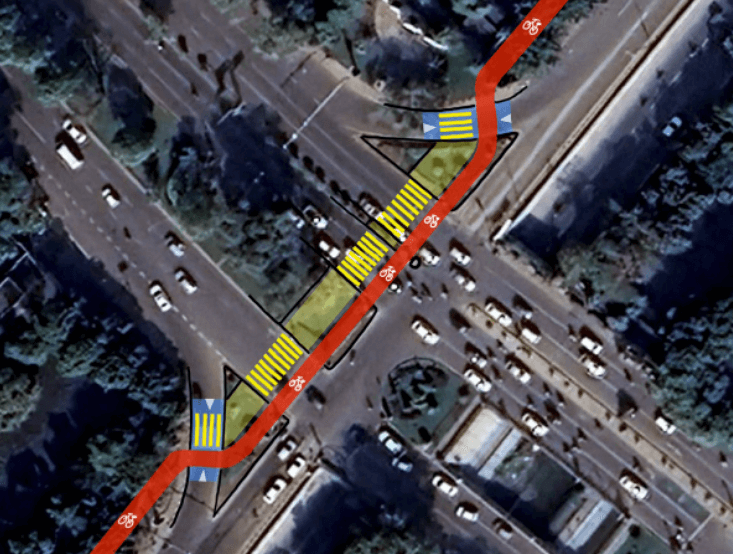
The importance of intersection design
Intersections are where most crashes occur, and where pedestrians and cyclists are most vulnerable. Intersection treatments are often given insufficient attention in the development of walking and cycling infrastructure, leaving disconnected and unsafe networks. Pedestrian crosswalks, painted bicycle crossings, refuge islands and speed tables are an integral part of safe intersection design. VOMobility works with the Asian Development Bank and Lahore Development Authority on a bicycle network and trial corridor.
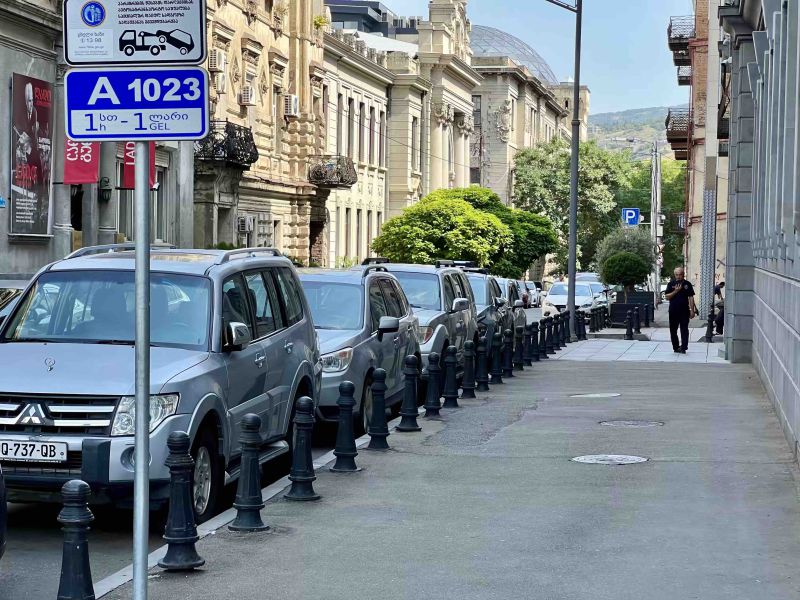
On-street parking reform in Tbilisi, Georgia
VOMobility was asked to support the Tbilisi Urban Development Authority in revamping their on-street parking policies and systems. Paid parking is currently covering only a small part of the central city, and prices are too low to lower parking demand. To improve availability of parking spaces, encourage public transport use, and generate funds for street and public space improvements, VOMobility is preparing a new parking strategy. This includes an updated parking policy, larger coverage of paid on-street parking, higher fees, changes to unlimited free residential parking, updates to parking technology, and a positive business case for parking enforcement.
.jpg)
Streets for Kids
In Dongshankou, Guangzhou, China, at school closing hours, school employees close the street to traffic for a minute to allow hundreds of students to cross comfortably. There are lots of ways we can (and must) make our streets safer for children.
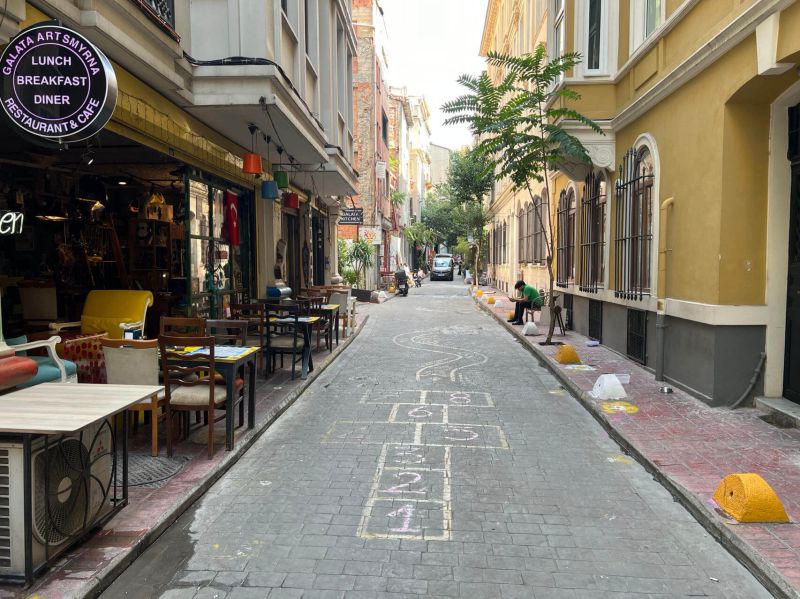
Streets as shared spaces in Istanbul, Türkiye
This street was observed in Istanbul's Galata district, a dense mixed-use neighborhood. The street is designed as shared space, with access for cars, but mostly designed for pedestrians, both local residents and visitors. The narrow street with a cobbled stone pavement indicate slow driving, and rocks prevent illagal parking on footpaths. Restaurants and cafés flow onto the street, kids play hopscotch, and everyone can enjoy life downtown.
.jpg)
Shaping the Investment Agenda for Pacific Island Countries
This week, we concluded our fourth and final week of workshops in the Pacific region. Following Honiara (Solomon Islands), Tongatapu (Tonga) and South Tarawa (Kiribati), workshops on sustainable mobility were held in Suva, capital of Fiji. These workshops are the result of desk and field studies, and assist government and other stakeholders in evaluating and readjusting their urban transport strategies for a more sustainable, inclusive and healthy future. The study shapes the investment agenda of World Bank and partners, and identifies a range of future projects in the Pacific and beyond. With increasing motorisation, congestion, reliance on fuel imports and worrying levels of NCDs, Pacific island countries are aware of the need to move toward better mobility solutions.
.jpg)
Bicycle Lane Network for Islamabad, Pakistan
VOMobility provides technical assistance to the Asian Development Bank and Capital Development Authority in their ambitions to build a bicycle lane network of 250+km in Pakistan's capital of Islamabad. The city was planned with wide green belts, which offer safe and convenient riding. To make the network safe, comfortable, direct, coherent and attractive, special attention is needed at intersections and crossings, and with the provision of amenities (e.g. public seating, bicycle parking, signage, shade and lighting). A bicycle sharing system is studied to provide residents with quick access to the BRT system.
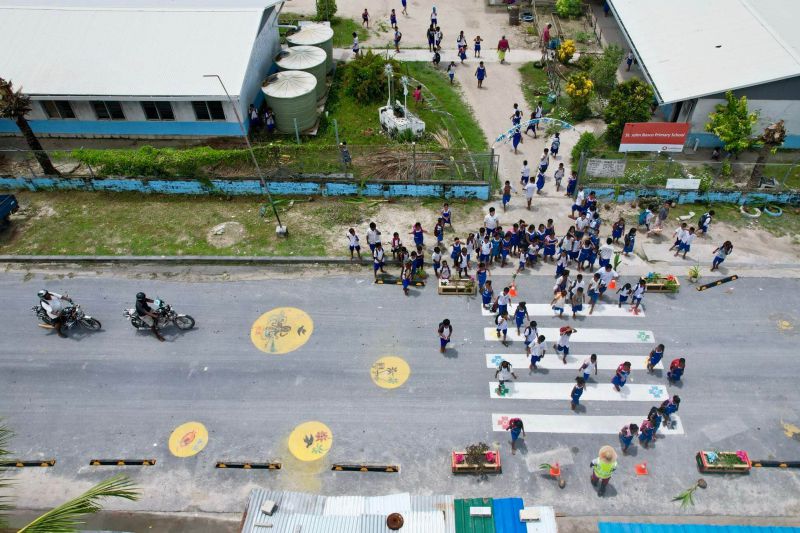
Tactical urbanism implemented in the Pacific
In past years, an alarming number of second-hand cars and motorcycles has been imported into the Pacific atoll of Kiribati. The increased number of vehicles and high traffic speeds have led to road safety issues. In March 2024, VOMobility implemented the Pacific's first ever tactical urbanism project, outside the Saint John Bosco primary school in Kiribati.
With the help of teachers and World Bank staff, students redesigned the street at the school entrance, bringing a crosswalk, creating a new footpath, narrowing the street, removing car wrecks, and adding plants, flowers and color. Within 4 hours, at a cost of US$2,200, the street had become better, safer and more beautiful. Students’ perceived safety went up from 1.2% to 100%. Average traffic speeds dropped from 34.7 to 19.7km/h. Vehicles yielding to students crossing the street jumped from 9% to 81%. What was intended as a two-day trial, has now become permanent.
Proud school principal Temoanre Korere: “When passing by schools, please drive slowly so the childrens’ safety is guaranteed and accidents are avoided. This project is not about us, not the teachers, not the parents, but about the children’s safety. So they can continue to pursue their education journey and be able to become people who will support Kiribati one day.”
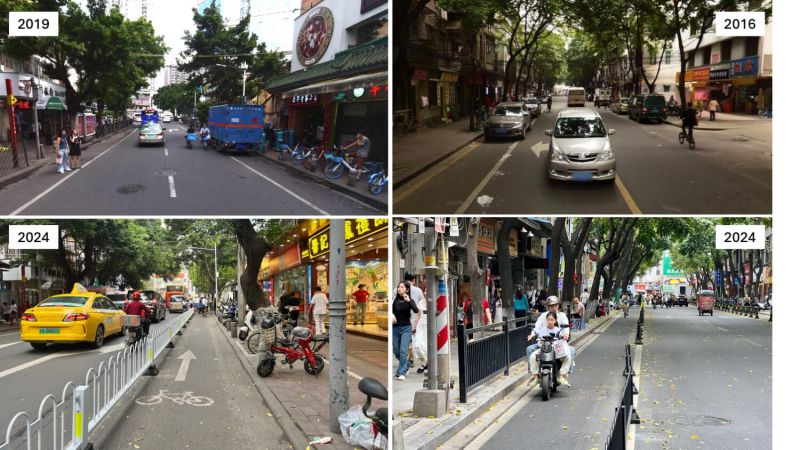
Guangzhou's bicycle lane revolution
In Guangzhou's historic neighborhoods, the (e-)bicycle is the dominant mode of transport. Bicycle lanes used to be demarcated with nothing more than paint, leading to rampant illegal car and truck parking. In past years, Guangzhou implemented hundreds of kilometers of segregated bicycle lanes, improving conditions for people on bicycles.
.jpg)
Retrofit your streets to provide cycling infrastructure
Lyon (France) spent a decade retrofitting streets to include cycling facilities. Traffic lanes on this one-way street were narrowed to allow for a counter-flow bicycle lane. 'Sharrows' are used to warn drivers of cyclists going with the flow of traffic. Photo in 2023.
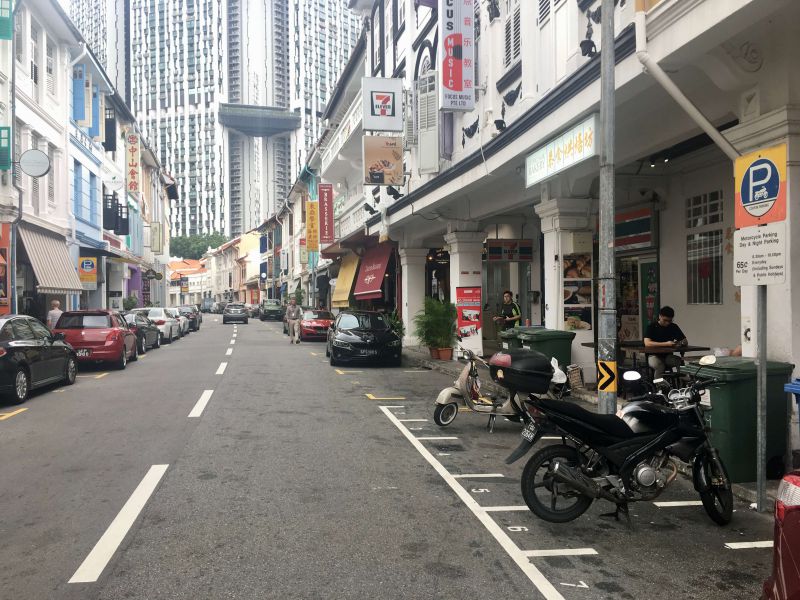
Organised on-street parking
Paid on-street parking is necessary to organise streets in central, commercial areas. It ensures spaces are used for short-term parking, and makes parking spaces available to others. This example in Singapore (2019) shows car, two-wheeler and delivery parking in different colors.
.jpg)
Obstacle-free footpaths
In the developing world, footpaths are often cluttered with street lights, traffic signs, transformers, shop advertisement signs, two-wheeler parking, and more. Due to poor planning and design and lack of oversight, pedestrians on footpaths are left dodging obstacles.
Proper footpath design allows for a:
- 'furniture zone' along the building façade for business use, such as outdoor seating and advertisement signs;
- 'pedestrian zone' for unobstructed walking;
- 'utility zone' for ulities, trees, traffic signals, two-wheeler parking, etc.
Photo of a good example in Taipei, Taiwan, 2023.
.jpg)
Riverside greenways for transportation and recreation
In 2010, Guangzhou (China) pioneered with the implementation of greenways. With an initial network of 1,000km, the city gradually expanded to 5,000km, while making improvements to some of the most popular greenways along the Pearl River. People on bicycles breeze past on dedicated, smooth and shaded cycleways, while families enjoy themselves in the adjacent playgrounds. Transportation and recreation can go hand in hand.
.jpg)
End of life vehicles
Large infrastructure investments in the Pacific region have led to drastic imports of old Japanese vehicles. Once on these beautiful islands, these vehicles often do not last longer than a year, and are left by the roadside. Much-needed recycling and export of these vehicles now started in Kiribati.
.jpg)
Pedestrian crossings in Fiji
Street improvements were done to Queens Road, in the commercial heart of Nadi, Fiji. At a signalized pedestrian crossing, bulb-outs halve the crossing distance and create space for seating and landscaping. On-street parking continues beyond the bulb-outs.
.jpg)
Wish to keep cars away from the pedestrian space?
All it takes to keep pedestrian spaces free from cars and trucks is planter boxes. Picture taken in Beijing, 2022.
.jpg)
Effective measures for safer streets
In the Pacific island of Kiribati the World Bank implemented street design improvements on the main corridor of the capitol South Tarawa. Space for walking was created through the implementation of concrete, permeable barriers that let through run-off water. The road diet, combined with raised speed tables, improves safety for all road users. A good example of quick, cost-efficient and effective measures to create streets for all.
.jpg)
Kids in Karachi's slums
Life is hard in Karachi's slums. But even there, you will find public spaces and amenities that serve the local youth. Dozens of kids are playing on a trampoline by the dried-up creek behind Aladin Park.
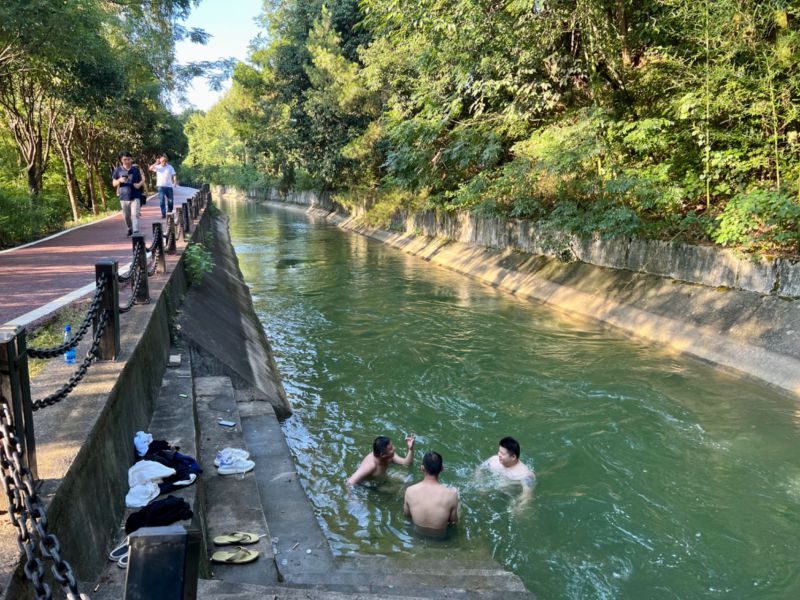
Refreshment in summer
Friends meet for a swim at a new greenway in Xianning, Hubei Province, China. Fresh mountain water flows again through this ancient aquaduct, providing city dwellers with much needed refreshment in the hot summer months.
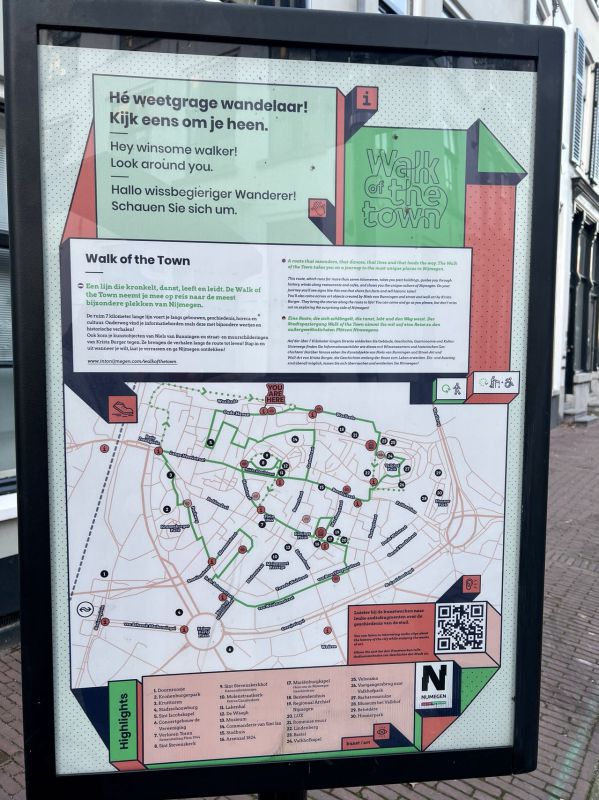
Hey winsome walker!
This information panel in Nijmegen, the Netherlands', takes you on a historic tour of the 2,000 year old city. You scan a QR code to hear fun stories of each of the places you pass.
Some cities make walking around town interesting.
.jpg)
